Gunpla and Photography
For me, photographing Gunpla is inseparable from the building process itself. Assembly, posing, and lighting are all part of the same creative cycle, and photography becomes the final stage where the model fully comes to life. Each step of construction reveals decisions made by the designers — how parts connect, how armor overlaps, and how structure supports movement — and documenting those moments allows the build to be appreciated beyond the finished result.
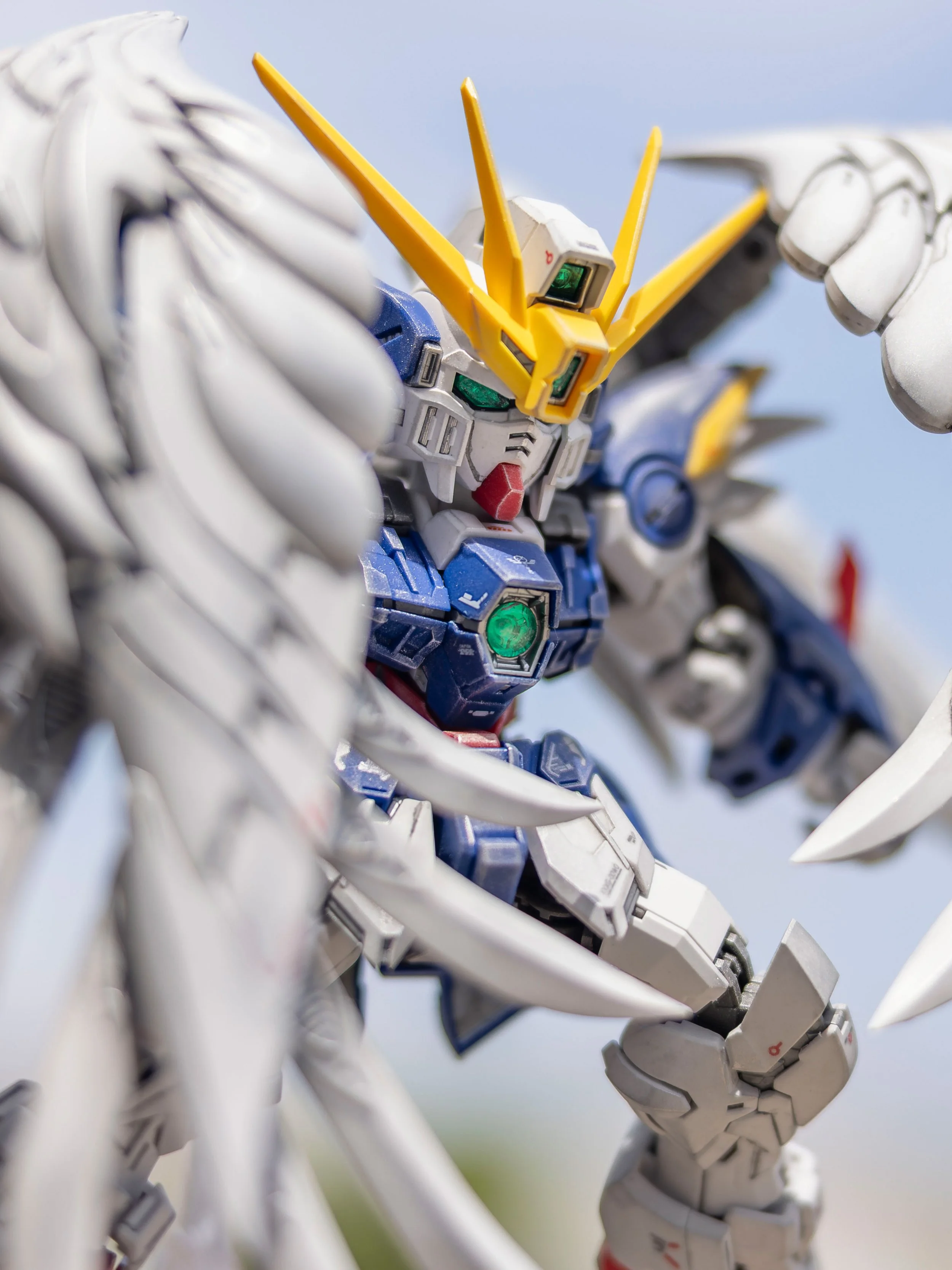
Every kit I photograph is one I’ve built myself, often spending ten or more hours carefully clipping parts from runners, removing and cleaning nubs, refining surfaces, and preparing pieces before assembly. That time investment creates a deeper understanding of how the model is engineered and how it should be presented visually. Subtle painting and light distressing of the armor help introduce variation and realism, giving the models a sense of wear and physical history that responds more naturally to light when photographed.
As the kits take shape, the transformation from loose components into a cohesive machine becomes a visual story worth capturing. Internal frames, exposed joints, and layered panels create opportunities to study form and texture through light. Photographing during assembly slows the process down, encouraging attention to small mechanical details that might otherwise go unnoticed once the model is complete. The camera becomes a way of observing engineering as much as aesthetics.
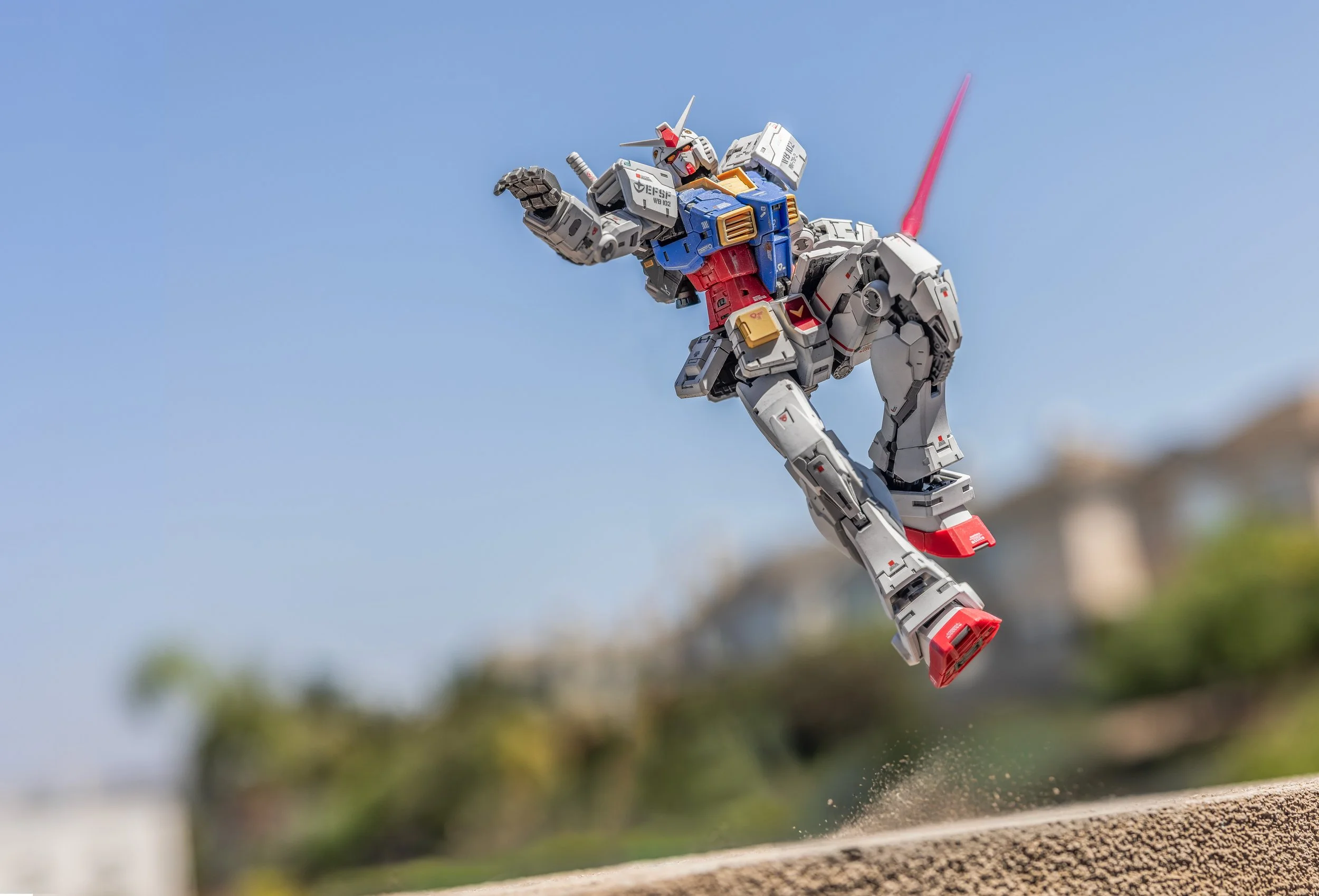
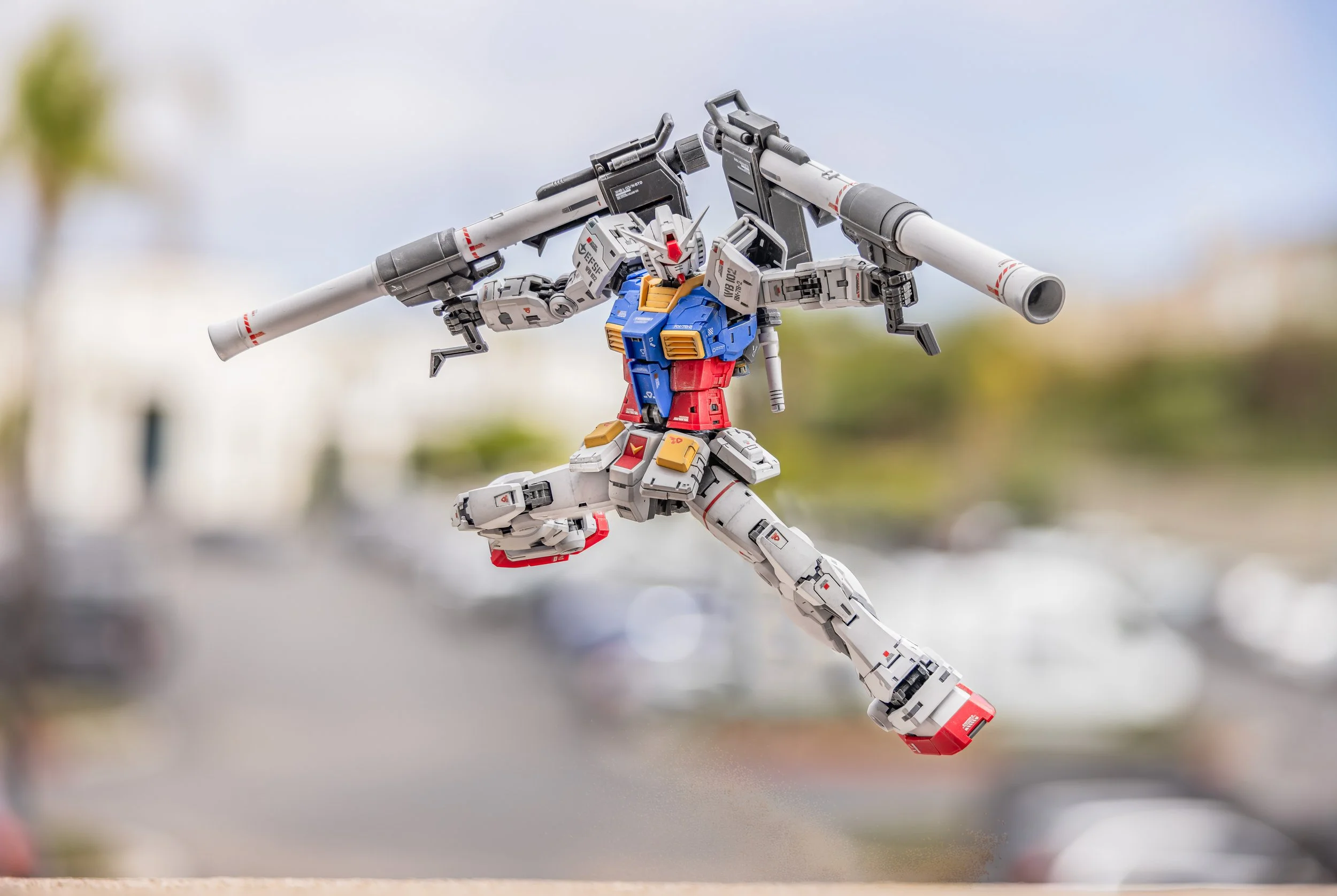
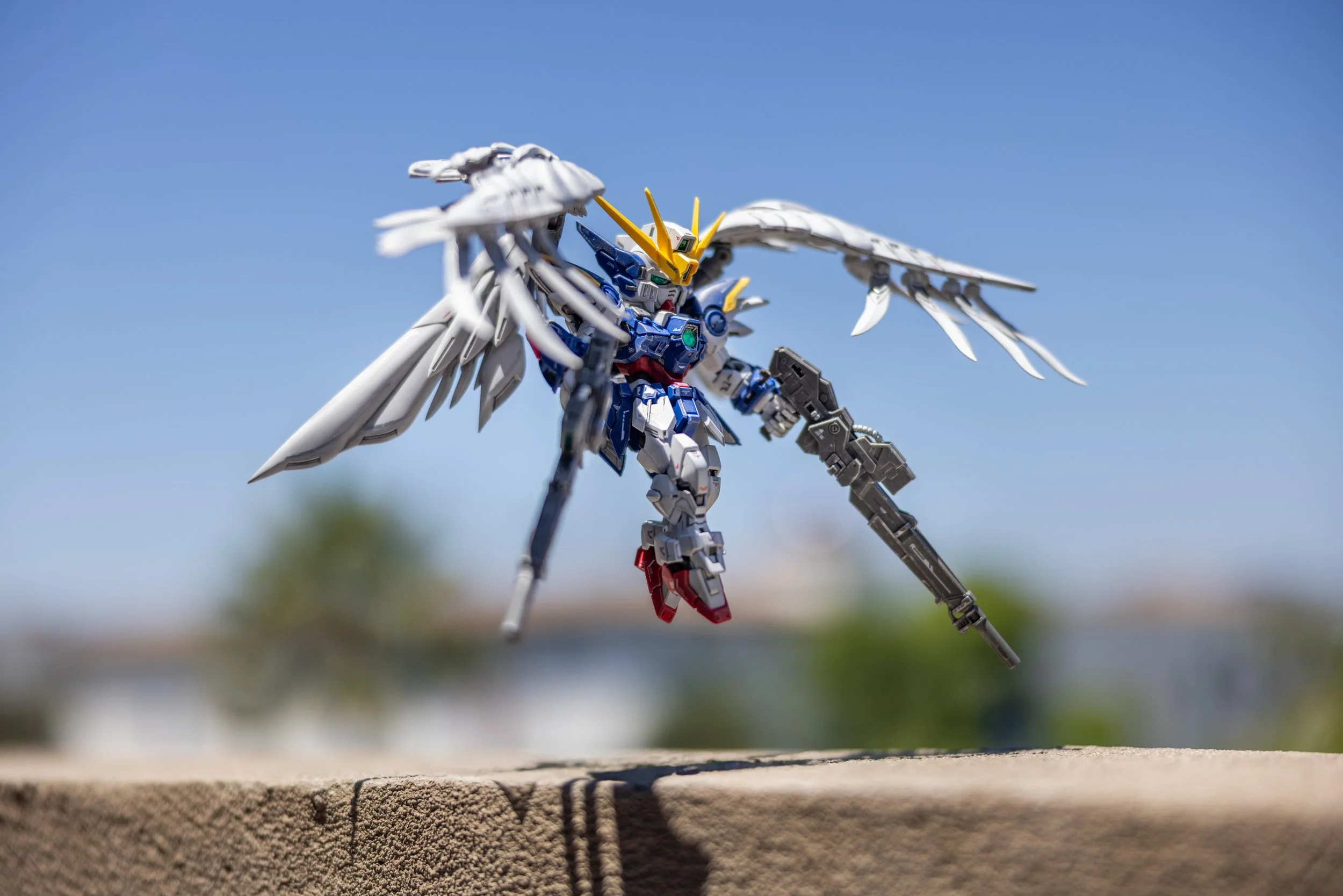
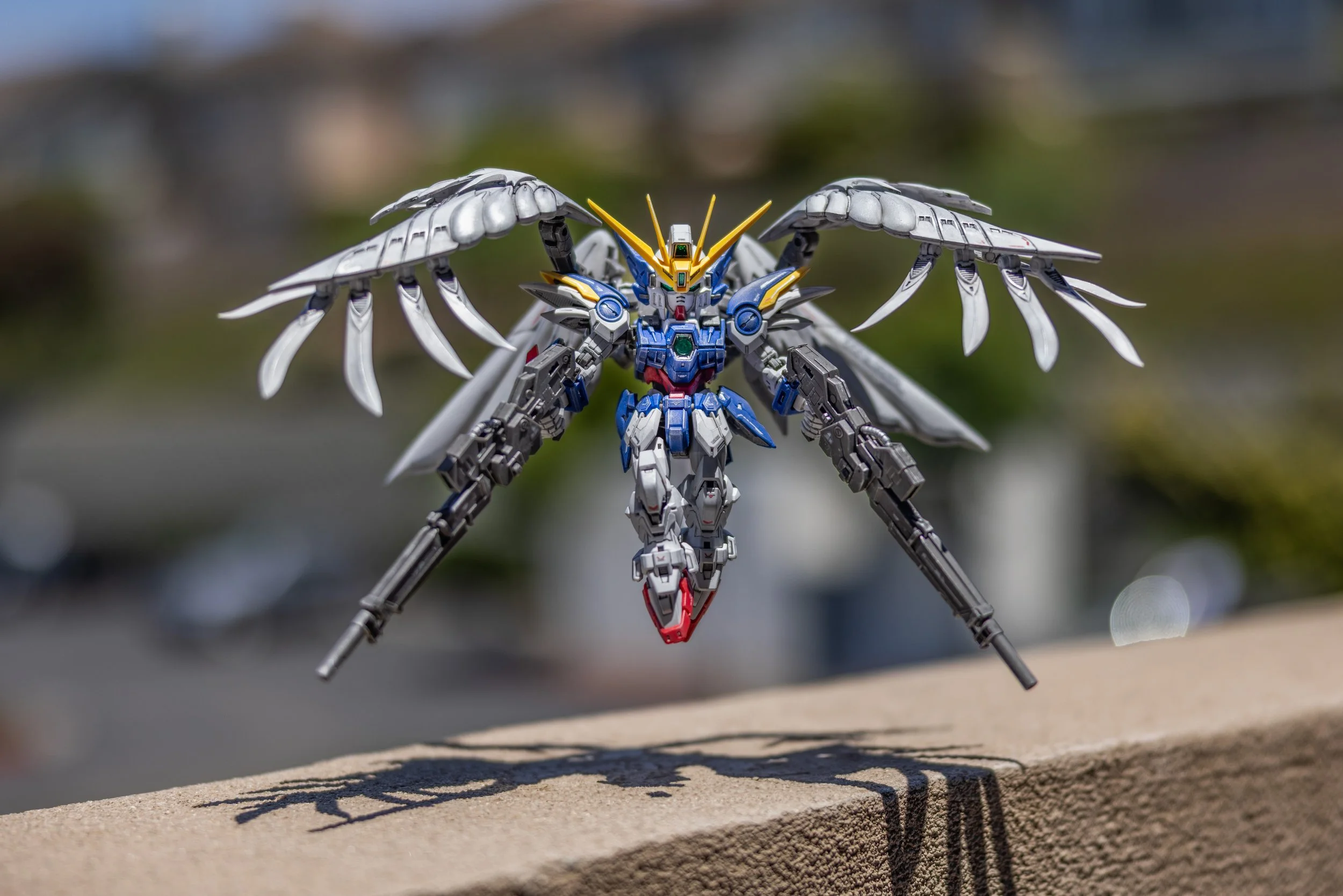
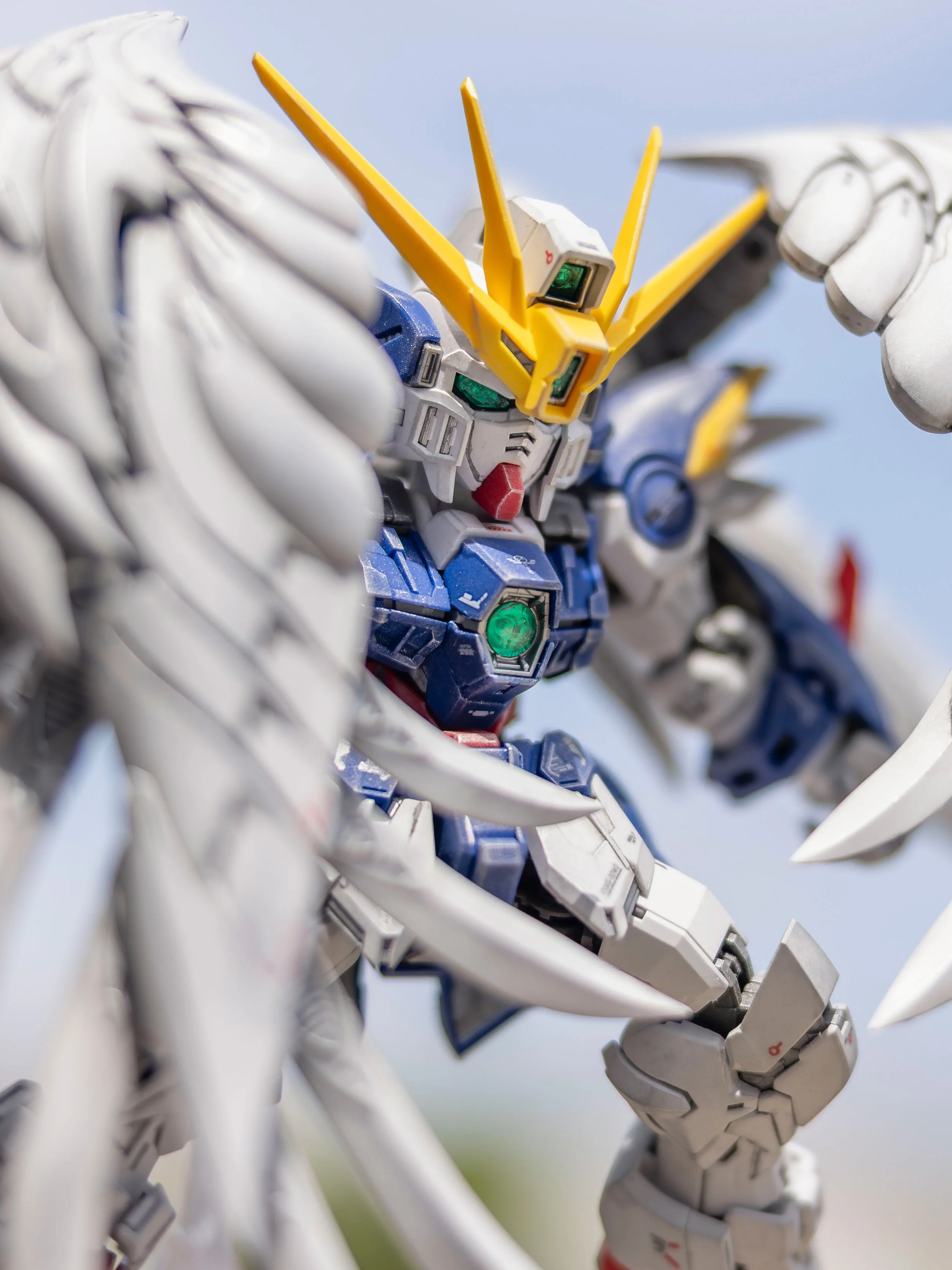
Working with builds like the Fatcat RX-78-2 in 1/100 scale alongside the MGSD Wing Zero EW highlights how different interpretations of Gundam design can coexist within a single photographic narrative. One leans into bold proportions and expressive presence, while the other compresses intricate engineering into a compact form without sacrificing articulation or complexity. Photographing both together shifts the focus away from individual kits and toward how design language translates across scale and style.
I’m drawn to photographing these models on simple backgrounds or within everyday locations rather than elaborate dioramas. Keeping the environment minimal allows the form and silhouette of the mobile suits to stand out while reinforcing the reality that these are physical model kits built by hand. The contrast between a fictional machine and a familiar setting creates tension — something recognizable placed into a world where it doesn’t quite belong.
Posing becomes the most important part of the process. Gundam designs are deeply tied to motion and character in animation, and translating that sense of movement into a static object requires careful observation. Small shifts in balance, angle, or posture can completely change how convincing a pose feels. The goal is not simply to recreate action scenes, but to capture moments that feel believable, as if the machine paused briefly in real space.
Scale also plays a significant role in how I approach photography. By placing the models alongside real-world textures or objects, the camera helps blur the boundary between miniature and reality. Lighting is used to reinforce this illusion — directional highlights emphasize weight and structure, while controlled shadows add depth that suggests something larger than its actual size. The intention isn’t to disguise the models as real machines, but to allow them to exist convincingly within a tangible environment.
Ultimately, Gunpla photography becomes a collaboration between builder, designer, and photographer. The craftsmanship of assembly, the engineering of the kit, and the decisions made behind the camera all contribute equally to the final image. Rather than presenting the models as finished collectibles, I see photography as a continuation of the build — a way to give presence, narrative, and physicality to objects that begin as plastic parts but evolve into expressive representations of machines imagined decades ago.